
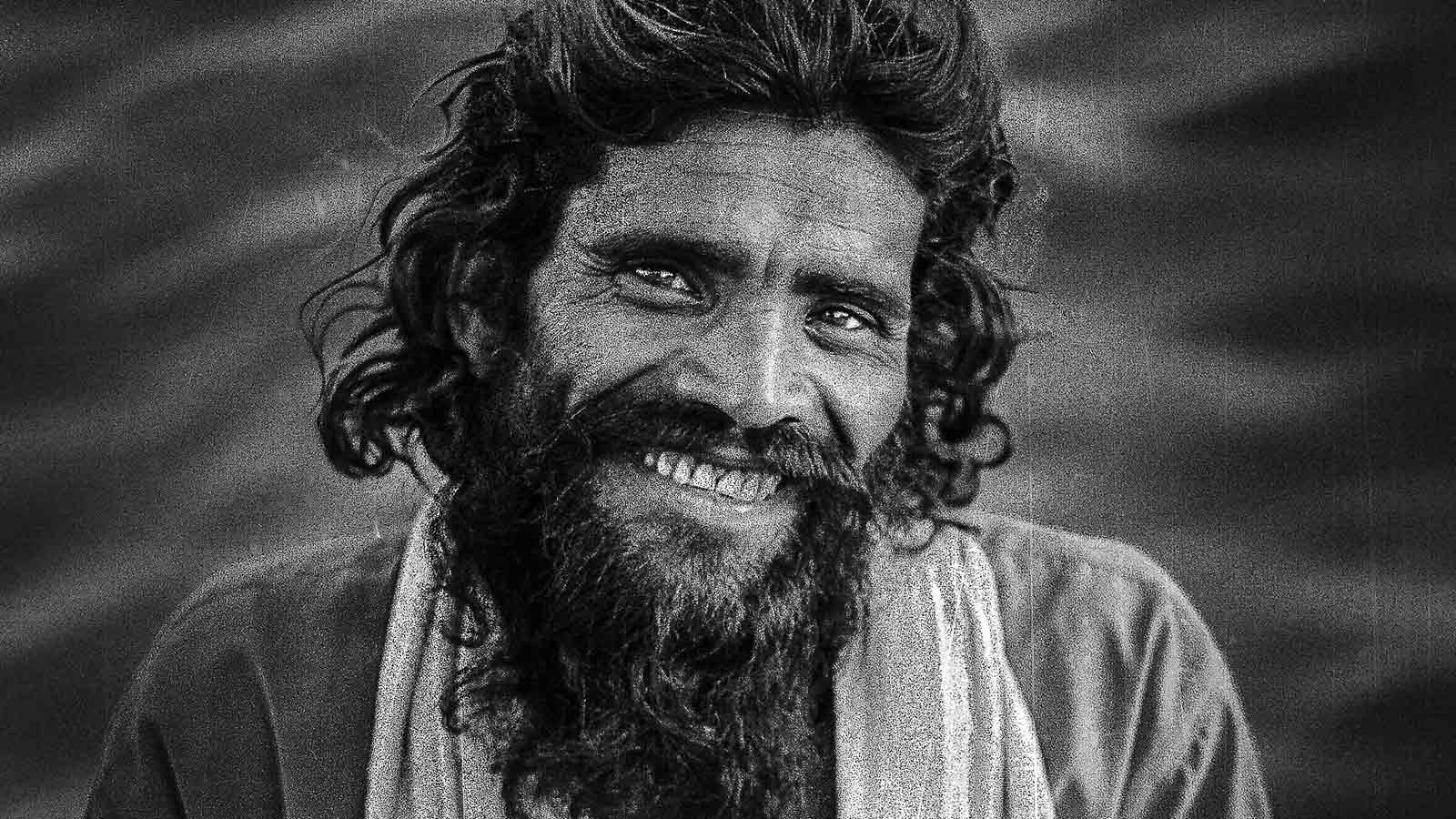
We were shooting a television feature on Maheshwari saris when I met Sadhu Gyananand. He was sitting on the edge of one of the stone ghats that lined up the bank of River Narmada in Maheshwar in Madhya Pradesh.
The River Narmada was at its widest here. Its aqua-green waters, slightly rippled, appeared calm, and provided a tranquil backdrop for the saffron-robed pensive figure of Gyananand, a sadhu (ascetic) trying to make out the meaning of life.
Gyananand made an adorable profile. His unkempt beard and matted locks fluttered as he paid obeisance to Narmada, considered by many in India holier than the holiest, Mother Ganga. Feeble sounds of the temple bells and hoarse voices chanted mantras, singing glory of the river imparted the scene an aura of divinity.
Not far off, in one of the temples widows in white, in stark contrast to the sedately colourful Maheshwari saris that the “clickety-clack” handlooms in the town weave, engaged in gossiping.
Banished by their reluctant sons and recalcitrant daughters-inlaw, at life’s end, often after their husbands have passed away, they are biding their time, waiting for death to transport them to heaven, considered particularly auspicious, when the soul leaves your body on the banks of a Holy River.
As in other towns like Varanasi and Vrindavan, “Mothers,” it seems, are more in need of Mother Narmada’s grace than men. Prominent on the ghat are stone memorials of women who have killed themselves on their husband’s funeral pyre committing the “highly admirable (abominable)” and “holy” act of sati.
The practice is now banned. Another flight of steps leads to Kaleshwar, Rajarajeshwar, Vithaleshwar and Ahileshwar temples. Adjacent to the ghat on a high mound, the eponymous fort towers over the landscape. Situated about 90 km from Indore in Madhya Pradesh, it was the capital of the Holkar Principality during the reign of the pious Queen Ahilyabai (1766–1796).
Flanking the opposite bank of the river is the pre-historic site of Navadatoli (c.1750 BCE). Maheshwar, also known as Mahishmati, had been an important Hindu religious centre. It still is, although overshadowed by Omkareshwar, one of the Dwadash (or Twelve) Jyotirlingas, 65 km upstream.

The peal of laughter and urgings by the young urchins as they leapt into the river turned the landscape into a place where it is easy to lose the sense of time.
I waited for Gyananand to complete his prayers. As he finished, his eyes met mine. I request him to remain in his position for two minutes.
As fast as I could, I adjusted my position to get at his level, set the focus of my SLR, checked the aperture and the shutter speed, and clicked.
Mumbling thanks, just as I was leaving, he spoke, ‘Won’t you take a picture of my face?’
Saying this, he turned towards the camera and posed with an adorable smile for a portrait. As I pressed the shutter release button, a childlike glint appeared on his face. He was very happy. After I had finished, Gyananand asked me what I would do with his picture.
‘Most probably, they would get published somewhere, in some newspaper or a magazine,’ I reply, trying to be both curt and respectful.
My answer excited him. ‘You mean to say everyone will see my photo?’ His voice was bubbling with enthusiasm ‘Yes,’ I reply. That got us talking.
‘Tell me, you are a “Sadhu.” You have renounced the world, and yet you are excited about a thing as mundane as your photo in a magazine?” I pause, looking intently at his face, ‘Which perhaps you won’t even see.’
He lowered his head and took time.
His demeanour was thoughtful. Perhaps, he was forming words. Little later, when he came up with his reply, it was rendered dramatically.
‘My name is Gyananand, and I am from Tikamgarh in Madhya Pradesh.’ He was trying to muster as much gravity as he could. ‘And I aspire to be a sanyasi (wandering ascetic).’ He continued. His eyes still looked down. He was pensive. Abruptly, he lifts his head, almost with a jerk, and focusing his eyes intently on mine, speaks in a voice that quivered.
‘But this world pulls me back...!’
A pause.
‘I am not sure whether I have made the right choice.’
He was silent thereafter. It appeared as if he had heaved a weight off his chest. The world, for a brief moment, felt freed from yearnings.
That also brings us to the end of our conversation.
I ask him to join me for a cup of tea. He acquiesces. The tea vendor makes a sullen face. Gyananand is impassive.
‘My “Guruji,” my teacher and my guide,’ he takes his name reverentially, ‘had forced me to become a “Sanyasi” and wear saffron* robes.’
He speaks in between the sips.
‘“For at least,” as he explained,’ Gyananand says,“ seeing the colour of your garment people will provide you with food.”’
...
*Saffron, in the Hindu religion, is associated with renunciation and is therefore preferred by the Sadhus.